
# Berlin Between Walls and Graffiti: Street Art That Tells History
Some cities keep their scars in museums. Berlin displays them on its walls.
Walking through the German capital is like wandering through a living canvas where every mural, every stencil, and every piece of street art tells a fragment of a story the whole world knows but that only here can you feel in your bones. You don't need to be an expert in contemporary art to be captivated: just look up.
The Wall: Where It All Began
The East Side Gallery is the mandatory starting point. This 1.3-kilometer stretch of the former Berlin Wall has become the longest open-air gallery in the world. More than a hundred artists from across the globe left their mark here after the Wall fell in 1989.
The kiss between Brezhnev and Honecker, painted by Dmitri Vrubel, is probably the most photographed image in all of Berlin. But don't stop there. Walk slowly, notice the lesser-known pieces: Birgit Kinder's Trabant bursting through the concrete, or Thierry Noir's colorful heads that were, in fact, the first paintings to appear on the western side of the Wall in the 1980s.
Local tip: Go early in the morning, before ten. Tour groups arrive at noon and the experience loses its intimacy. At dawn, with the low-angle light reflecting off the River Spree, each mural takes on a different dimension.Kreuzberg: The Rebel Heart
If the East Side Gallery is the official history of Berlin's street art, Kreuzberg is its underground soul. This neighborhood, which during the Cold War was literally pressed against the Wall, became a haven for artists, squatters, and counterculture.
Today, strolling along Oranienstrasse or the streets surrounding Görlitzer Park is like immersing yourself in a permanent exhibition that mutates every week. Artists like El Bocho work here, whose wide-eyed characters appear and disappear from facades, or Alias, whose black-and-white figures convey a melancholy that contrasts with the chromatic chaos of the neighborhood.
Don't miss the inner courtyard of Kunsthaus Tacheles, even though the original building was demolished and rebuilt. The spirit of what it was lives on in the surrounding streets. If you want the complete alternative Berlin experience, a guided tour through Berlin's underground will reveal corners that don't appear in any guidebook.
Friedrichshain: Murals with a Message
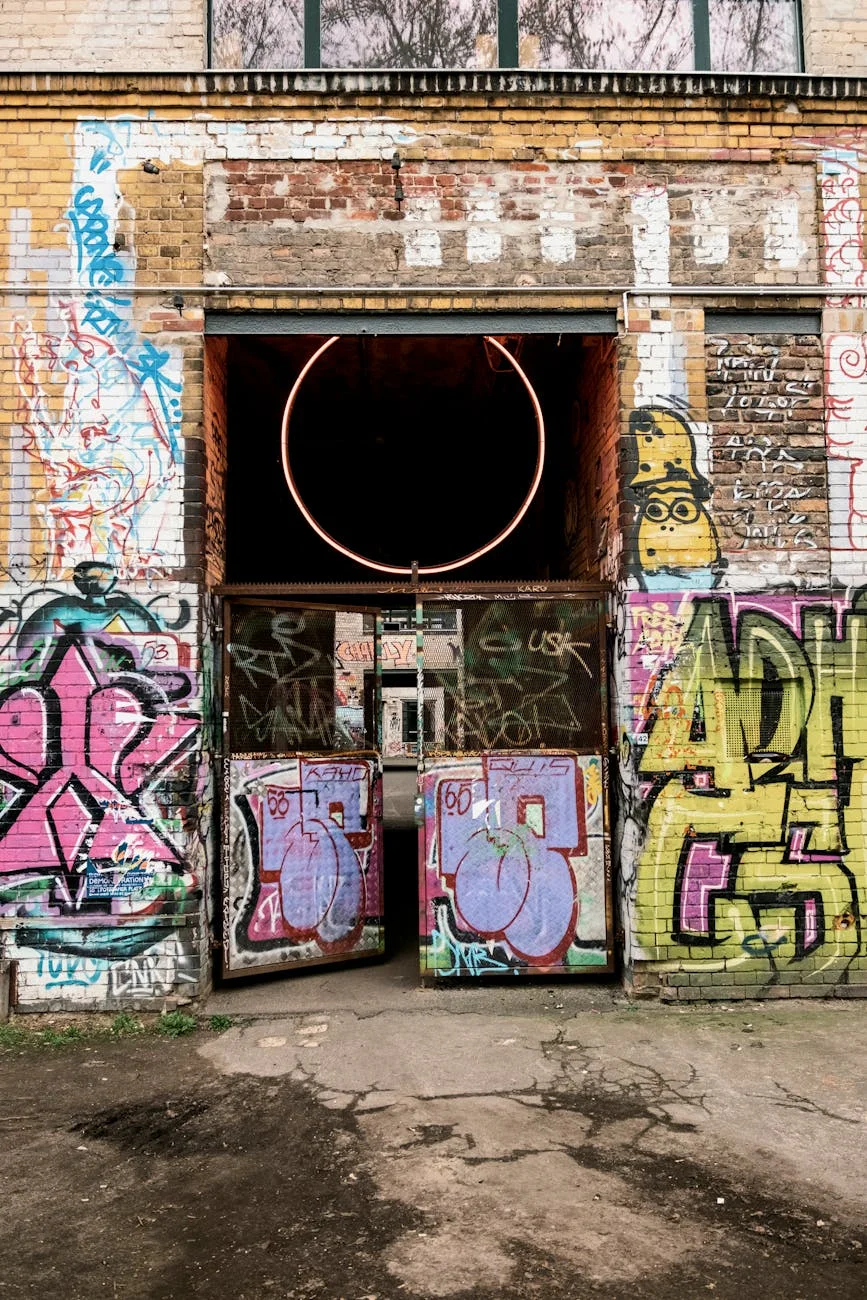
On the other side of the Spree, Friedrichshain competes with Kreuzberg in artistic density. The RAW-Gelände area, a former railway complex converted into a cultural space, is a true cathedral of graffiti. Every hall, every abandoned wagon, every meter of wall is covered in art.
But what makes Friedrichshain special is its political edge. Here, murals aren't just aesthetics: they're protest. Against the gentrification threatening the neighborhood, against rising rents, against property speculation. The walls speak, and they speak loudly.
Among the most active artists in the area is BLU, the mysterious Italian muralist who left some of his most powerful works in Berlin, including that one of chained businessmen that was erased as a protest against the speculation on the very building where it was painted.
Schöneberg and Beyond: Art Where You Least Expect It
Berlin's street art isn't limited to the trendy neighborhoods. In Schöneberg, the murals around the Urban Nation Museum elevate street art to museum status. And it's free.
In Wedding, to the north, former industrial buildings have been transformed into monumental canvases. And in Lichtenberg, a former stronghold of East Germany, original socialist murals coexist with contemporary interventions in a fascinating visual dialogue.
To capture the best photo spots in the city, including these lesser-known corners, it's worth exploring Berlin's most Instagrammable locations.
The Story the Walls Tell
What makes Berlin's street art unique isn't its quantity or technical quality, but its function as a chronicler. Each decade has left its layer:
Today, Berlin remains a magnet for street artists from around the world, though the city changes fast. What you see on a wall today might not be there tomorrow. And that, precisely, is part of the magic.
How to Experience Berlin's Street Art
You can explore Berlin on your own with a mural map (several apps geolocate them), but if you want to understand the context and stories behind each piece, a guided experience makes all the difference.
For those looking to dive deeper into the city's history and culture beyond the graffiti, the cultural route through Berlin's museums and history perfectly complements the street experience with the art kept behind closed doors.
And if all that walking makes you hungry, gastronomic Berlin awaits with currywurst, döner kebab, and a culinary scene as diverse as its walls.
---
Berlin doesn't decorate its streets: it uses them to speak. And if you know how to listen, every wall has something to tell you.