
Granada: The Alhambra, Flamenco and Andalusian Soul
Some cities you visit, others you feel. Granada belongs to the second group. Here the meltwater from Sierra Nevada sings through the Albaicín's irrigation channels, jasmine ambushes you on every corner and the Alhambra appears at the end of every alley like a mirage that turns out to be real. This is a city where tapas are free, flamenco is born in caves carved from rock and sunsets paint the highest range on the peninsula pink.
The Alhambra: A Palace Unlike Anything Else
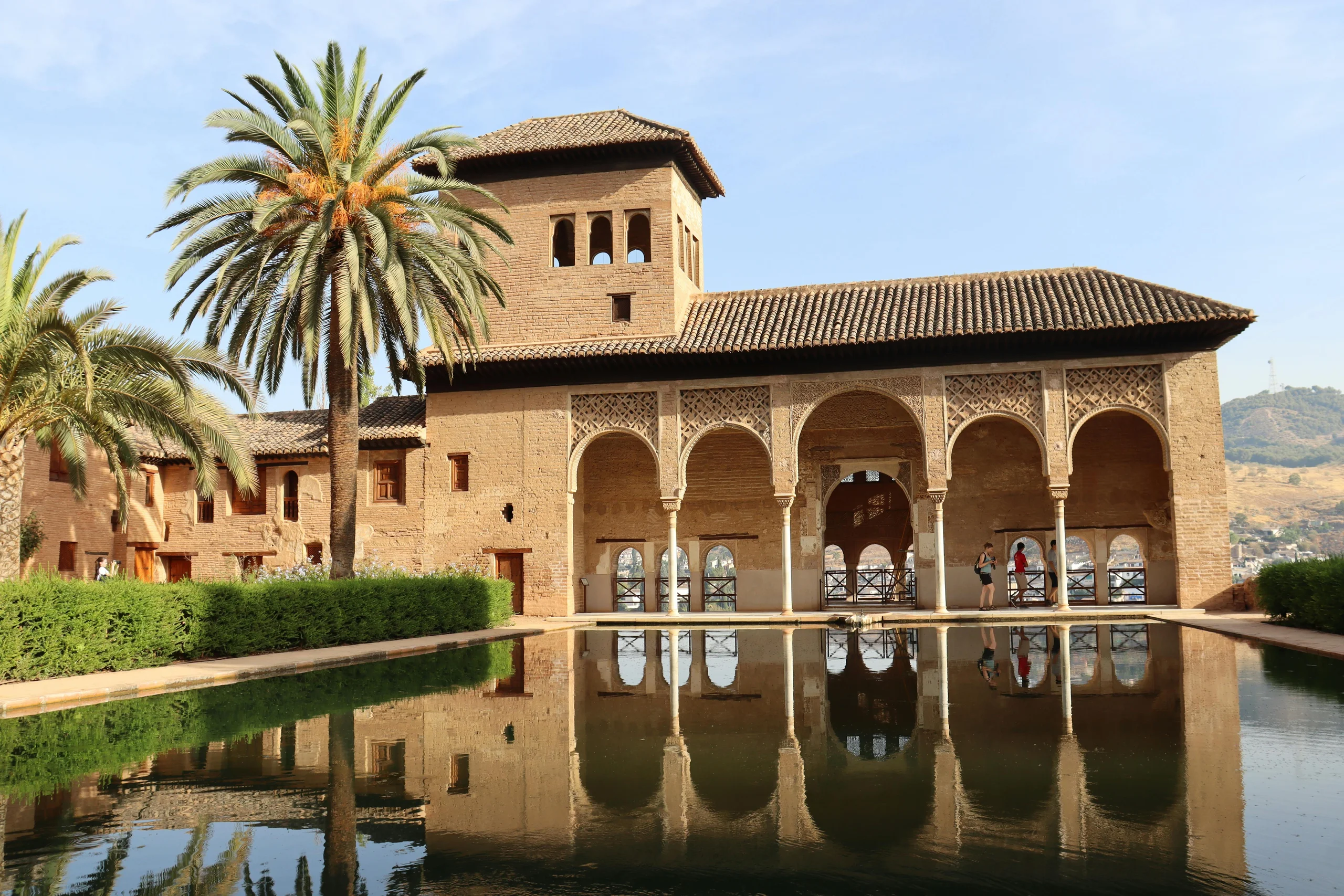
You may have seen a thousand photos of the Alhambra, but none will prepare you for what you feel when you cross the Court of the Lions. The light filtering through stucco lattices, the murmur of water in the fountains, the impossible precision of the muqarnas — everything in this Nasrid palace is designed to awaken the senses.
The Nasrid Palaces are the highlight, but do not overlook the Generalife, the sultans' summer gardens where rose beds and fountains create an oasis unchanged in seven centuries. The Alcazaba, the oldest section, offers the best views of the city from the Watch Tower.
Essential tip: Tickets sell out weeks in advance. Book online early and choose the first morning slot for fewer crowds and magical light.The Albaicín: Getting Lost Is the Plan
The Albaicín is the largest former Arab quarter in Europe, and wandering its cobbled lanes is time travel. White houses with geranium pots, hidden squares with tiled fountains, and cármenes — houses with walled gardens — hiding small secret paradises.
The Mirador de San Nicolás is Granada's most famous viewpoint, and rightly so: the view of the Alhambra with Sierra Nevada behind, especially at sunset, is an image that stays with you forever.
Free Tapas: The Most Generous Tradition
Granada is Spain's great capital of free tapas. Order a beer and they bring you a plate of food. The Calle Navas is the best-known area, but real granadinos head to Realejo and Plaza Larga in the Albaicín.
The Sacromonte: Caves, Flamenco and Duende
The Sacromonte is Granada's Roma quarter, a hillside dotted with whitewashed caves where a unique form of flamenco was born. The zambras — performances of song and dance inside the caves — are a visceral experience.
The Historic Centre
The Cathedral is a Renaissance colossus, but the gem is the adjacent Royal Chapel, where Ferdinand and Isabella rest. The Alcaicería, the old Moorish silk market, is now a labyrinth of little shops selling lanterns, spices and ceramics.
Practical Tips
---
Discover all the experiences Granada has in store at letsjaleo.com/granada. The Alhambra, tapas, flamenco and the purest soul of Andalusia.