
Liverpool Beyond the Beatles: Music, Art and Waterfront
Yes, we know. The Beatles are from Liverpool. Penny Lane, Strawberry Fields, the Cavern Club... But if you reduce Liverpool to four lads with fringes, you're missing one of the most vibrant, creative and surprising cities in all of England. Liverpool is music, art, architecture, gastronomy and a street energy you won't find anywhere else in the UK.
Lace up your comfy trainers and keep your eyes wide open, because this journey goes well beyond "Let It Be".
The Waterfront: Where the City Faces the World
The Liverpool Waterfront is a UNESCO World Heritage Site, and when you see it, you understand why. The Three Graces — the Royal Liver Building, the Cunard Building, and the Port of Liverpool Building — stand majestic against the River Mersey, creating one of the most impressive skylines in Europe.
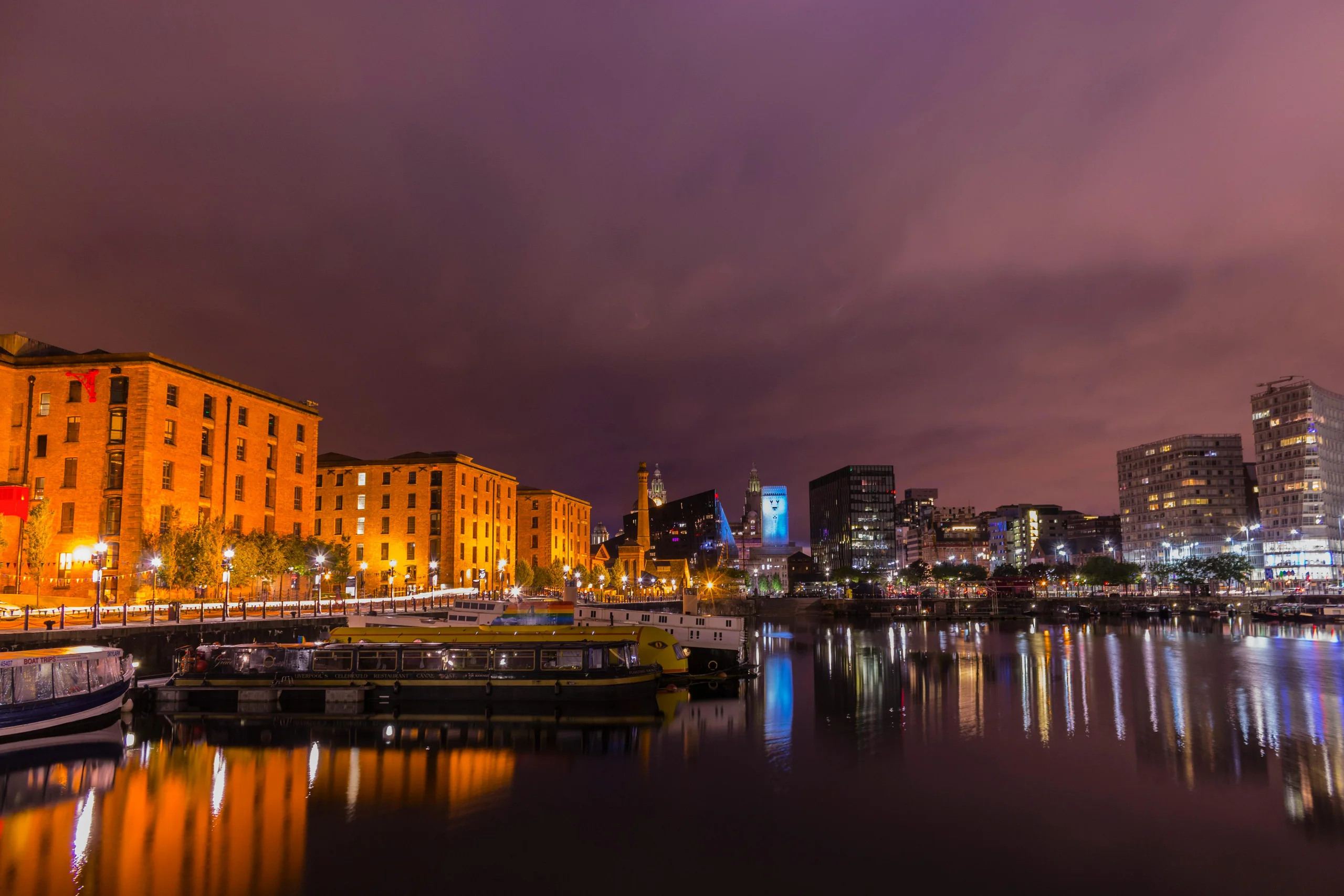
But the waterfront isn't just for looking. Albert Dock is a universe in itself: 19th-century port warehouses converted into galleries, restaurants, bars and independent shops. Here you'll find Tate Liverpool, with a modern art collection that rivals its bigger London sibling, and it's all free.
Stroll along the quayside at sunset, when the sun paints the Mersey orange and gold, and you'll understand why Scousers are so proud of their city.
If you want to experience the waterfront like a local, don't miss our experience Cultural Liverpool: Art and Architecture by the Mersey.
The Anglican Cathedral: Britain's Largest
The Liverpool Cathedral is a red sandstone monster that leaves you speechless. It's the largest Anglican cathedral in Britain and the fifth largest in the world. But what makes it special isn't the statistics — it's the feeling of being inside.
The central nave stretches towards infinity, bathed in light filtering through stained glass windows. Take the Tower Experience: a lift carries you to the top of the tower, where all of Liverpool, the Mersey and, on clear days, even the Welsh mountains spread out before you. Entry to the cathedral is free; the tower costs a few pounds that are worth every penny.
Fun fact: The cathedral took 74 years to build (1904 to 1978) and was designed by Giles Gilbert Scott, who was just 22 when he won the competition.The Baltic Triangle: Where New Liverpool Is Born
Forget the touristy streets of the centre. If you want to feel the pulse of modern Liverpool, head straight to the Baltic Triangle. This former industrial quarter, full of red brick warehouses, has become the city's creative epicentre.
Here you'll find craft breweries like Baltic Brewing in converted industrial units, art galleries in former mechanic workshops, food courts like Baltic Market (where you can try everything from Japanese ramen to Mexican tacos under a corrugated metal roof), and music studios where the next big band rehearses every night.
At weekends, the Baltic transforms: DJs on improvised terraces, street food, murals that appear overnight, and a mix of people from art students to families with pushchairs. It's pure creative chaos.
Bold Street: England's Most Eclectic Street
If you had to distil Liverpool's soul into a single street, it would be Bold Street. It starts at the department stores on Church Street and climbs uphill towards the bohemian zone of Hardman Street, transforming with every step.
Independent coffee shops next to vinyl record shops. Lebanese restaurants beside curry houses. Second-hand bookshops sharing walls with sustainable fashion boutiques. Lunyalita serves tapas that would make a Sevillian grandmother weep (and I mean that as a compliment), while Leaf is a tea house-bookshop-gallery where you can spend an entire afternoon lost between pages and cups of Earl Grey.
Bold Street is Liverpool condensed: eclectic, generous, a bit chaotic and absolutely irresistible.
The Music Scene: Beyond the Cavern
Yes, you can visit the Cavern Club. It's fine, it's historic, it has its charm. But Liverpool's 21st-century music scene is infinitely richer than a touristy basement.
The Philharmonic Dining Rooms ("The Phil") is a Victorian pub so ornate it's a listed building. The urinals in the men's toilets are pink marble and are heritage-listed. But beyond the decor, jazz and folk sessions here will pin you to your stool.
Jacaranda Records, on Slater Street, was the first venue where the Beatles played, long before the Cavern. Today it's a bar-restaurant with live music every night and a programme spanning indie to electronica.And if you want to go more underground, 24 Kitchen Street in the Baltic Triangle is an industrial space programming the best of the city's techno, house and experimental music.
Explore the music scene with Liverpool by Night: Live Music and Historic Pubs.
The Free Museums: Culture Without Excuses
Liverpool has one of the best free museum offerings in the entire UK. And I'm not talking about small or second-rate museums: these are world-class institutions.
The World Museum is a journey from Egyptian mummies to outer space, with a planetarium included. The Museum of Liverpool tells the city's story with brutal honesty: from the glory of empire to its role in the slave trade, through the musical revolution of the 60s.
And then there's the International Slavery Museum, one of the most important and moving museums in the world. Liverpool was Europe's largest slave port, and this museum doesn't hide it: it confronts it head-on, with testimonies, objects and a narrative that shakes you. It's an essential visit.
The Food Scene: The Surprise You Weren't Expecting
Liverpool as a foodie destination? Yes, and emphatically so. The city has undergone a culinary revolution in the last decade that's put it on Britain's food map.
Maray, on Bold Street, serves Middle Eastern cuisine with a British twist that's pure magic: disco cauliflower, crispy falafel, fried halloumi with honey... Arrive early or prepare to queue. Roski, from local chef Anton Piotrowski (MasterChef winner), is accessible fine dining: tasting menus that play with British and European flavours at prices that won't destroy your wallet.And for something more street-level, Duke Street Market is the food hall every traveller needs: taco stands, Neapolitan pizzas, Vietnamese pho and more, all under the roof of a former industrial warehouse.
Sefton Park and the Palm House
Liverpool isn't all brick and concrete. Sefton Park is a 93-hectare green oasis in the south of the city, with a lake, tree-lined paths and an architectural gem at its centre: the Palm House.
This Victorian glass and iron conservatory was lovingly restored and today hosts events, weddings and exhibitions. But the best time to visit is on an ordinary day, when it's half-empty and you can wander among tropical palms while the rain patters against the glass. It's a moment of perfect peace in the middle of the city.
Local tip: On Sunday mornings, the park fills with runners, families and dog walkers. Bring takeaway coffee and lose yourself in the paths.Getting Around Liverpool
Liverpool is a compact and very walkable city. The centre, waterfront, Bold Street and the cathedral are all within walking distance. For the Baltic Triangle and Sefton Park, a short bus or taxi ride drops you at the door.
The Merseyrail connects the centre with the outskirts, and the Ferry across the Mersey (yes, like the song) takes you to Birkenhead with spectacular skyline views. It costs little more than a bus ticket and the views are priceless.
My perfect itinerary:Liverpool doesn't need you to come looking for the Beatles. In fact, it works better when you forget them a little and let the city show you what it is today: a creative, diverse, brutally honest metropolis full of life.
Because Liverpool doesn't live in the past... it's too busy inventing the future.