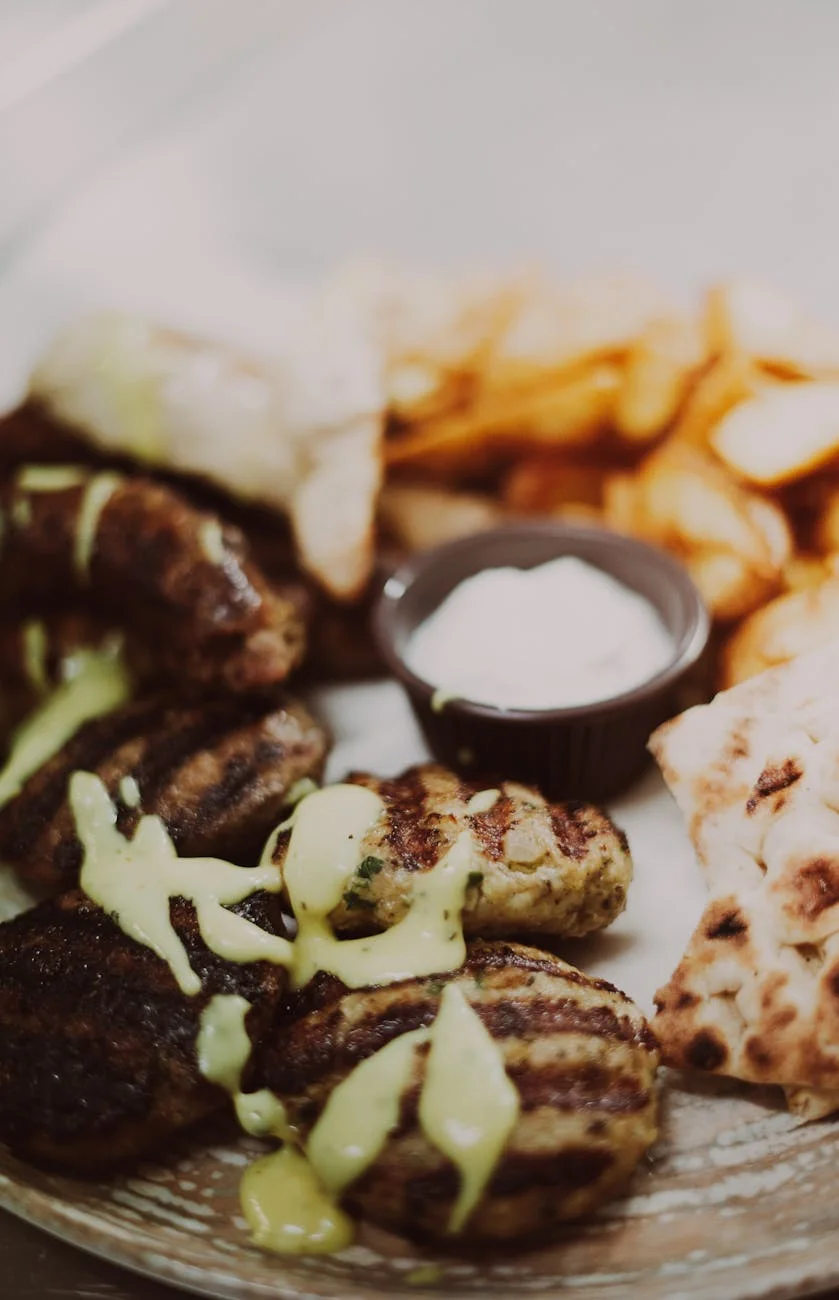

# Flavors of Greece: From Moussaka to Street Souvlaki
Greek cuisine is much more than salad and yogurt. It's one of the oldest culinary traditions in the world, and Athens is its most vibrant showcase. Here, food isn't just nourishment: it's conversation, celebration, and family memory condensed into every bite.
But beware: if you stick to the terraces of Plaka with Acropolis views, you'll eat well but pay dearly and miss the best parts. The real gastronomic Athens is in the neighborhoods, in the street stalls, and in the tavernas without views but with soul.
Souvlaki: King of the Street
Let's start with the essentials. Souvlaki is to Athens what pizza is to Naples: street food elevated to cultural status. Marinated pork or chicken, grilled over charcoal, served in pita bread with tomato, onion, tzatziki, and french fries. That simple. That perfect.
But there are nuances. Souvlaki proper refers to the skewers (kalamaki). Gyros is the meat spinning on the vertical spit, sliced thin. And pita gyros — wrapped in pita bread with all the toppings — is what most people mean when they say "I want a souvlaki."
Athenians have debated for decades about which is best. In Monastiraki, the square is surrounded by souvlakerias competing side by side. But if you want the local verdict, move away from the center: the neighborhoods of Pagrati and Koukaki have options that tourists don't know about.
For a total immersion in Athenian flavors, the souvlaki, mezze, and ouzo experience takes you through the city's best gastronomic corners.
Moussaka: The Dish Nobody Makes the Same
Moussaka is Greece's signature dish, and every family has their version. The base is always the same: layers of eggplant, ground meat with tomato and spices, and a thick gratinéed béchamel. But the details change: some families add potato, others zucchini. Some use cinnamon, others nutmeg. The result is always comforting.
The most common mistake is ordering moussaka at a tourist restaurant and receiving a reheated industrial version. Authentic moussaka is made in the morning, baked for hours, and served warm, not scalding. If it comes out of the kitchen in less than ten minutes, be suspicious.
Where to try it: The tavernas of Exarchia and Pangrati usually have homemade moussaka as a daily special. Ask for the "piato tis imeras" (dish of the day) and trust.Mezze: The Art of Sharing
Greeks don't eat, they share. The Greek table is a succession of small dishes — the mezze — that arrive unhurried while conversation flows and ouzo is poured with water.
The essentials:
In Athens, the best mezze are found in ouzeri — tavernas specializing in ouzo and small plates — in the neighborhoods of Psirri and Petralona. Don't look for a menu: the best places have a chalkboard that changes daily based on what arrived from the market.
The Central Market: Athens' Heart
The Athens Central Market (Varvakios Agora) is a complete sensory experience. The fish pavilion, with its mountains of octopus, sea bream, and sardines, is a photograph of the Mediterranean diet in its purest form. The meat section, with hanging lambs and offal vendors, isn't for sensitive stomachs, but it's authentic to the core.
Around the market, tavernas that have been feeding merchants for decades serve some of the city's most honest dishes: lentil soup, giant baked beans, braised lamb. Low prices, generous portions, zero pretension.
To live Athens as its residents do, passing through the market and daily rituals, the Athens like an Athenian experience is the best way to understand it.
Ouzo and Tsipouro: Drinking Like a Greek
Ouzo isn't a drink for getting drunk: it's a social ritual. It's served in a tall glass, water is added (turning it milky, a phenomenon called the "louche effect"), and it's sipped slowly, always accompanied by food.
Tsipouro, its cousin from northern Greece, is stronger and more direct. In Athens you'll find it in the most traditional tavernas, served in a ceramic jug with complimentary mezze.
And then there's Greek wine, the great surprise for many visitors. Indigenous varieties — Assyrtiko from Santorini, Xinomavro from Naoussa, Agiorgitiko from Nemea — are among the Mediterranean's finest and much more accessible than their French or Italian equivalents.
Sweets: Greece's Other Side
Greek pastry is a direct inheritance from Ottoman cuisine, and Athens is full of pastry shops (zacharoplasteio) where temptation is irresistible.
The best loukoumades in Athens are in Psirri, where several shops compete for the title. They're eaten hot, freshly made, standing in the street. Any other way is incomplete.
The New Athenian Cuisine
In recent years, Athens has undergone a quiet gastronomic revolution. A new generation of chefs is reinterpreting Greek cuisine with contemporary techniques while respecting ingredients and traditions.
Restaurants in Koukaki, Metaxourgeio, and Keramikos offer tasting menus that start from grandma's recipes and take them to another level: deconstructed moussaka, fava with truffle, octopus with beetroot purées. It's not fusion: it's evolution.
For those who also seek the cultural dimension, combining the food route with classical Athens: from the Acropolis to the Agora reveals how food and Greek civilization have been intertwined for three thousand years.
Practical Tips for Eating in Athens
1. Avoid restaurants with photos on the menu. It's an almost infallible sign of tourist food.
2. Ask for "piato tis imeras" (dish of the day). It will always be homemade and cheap.
3. Eat late. Greeks have lunch at 2:00-3:00 PM and dinner at 9:00-10:00 PM. Going at 7:00 PM means dining alone.
4. The complimentary bread is charged. Along with bread they usually bring a small plate of olives or cheese. It's called "couvert" and is added to the bill.
5. Leave cash tips. 5-10% on the table is the custom.
6. Explore the neighborhoods. The best gastronomic discoveries are in underground Athens, far from the tourist circuits.
---
In Greece, the table is where life truly happens. You don't eat to fill your stomach: you eat to be together. And in Athens, that table is always set.