
One Day in London: The Essential Guide to the British Capital
London is one of those cities you could explore for months and still discover new corners. But the reality is that many travellers only have one day to experience it. And here's the good news: with a well-planned day, you can have an experience that will leave you speechless.
This isn't a guide that tries to cram twenty attractions into twelve hours. It's a smart route, tested by locals, that combines the must-see icons with authentic moments that most tourists miss. Get ready to walk (quite a lot), eat (very well) and fall in love with a city that's been reinventing itself for two thousand years.
8:00 — Westminster: Where It All Begins
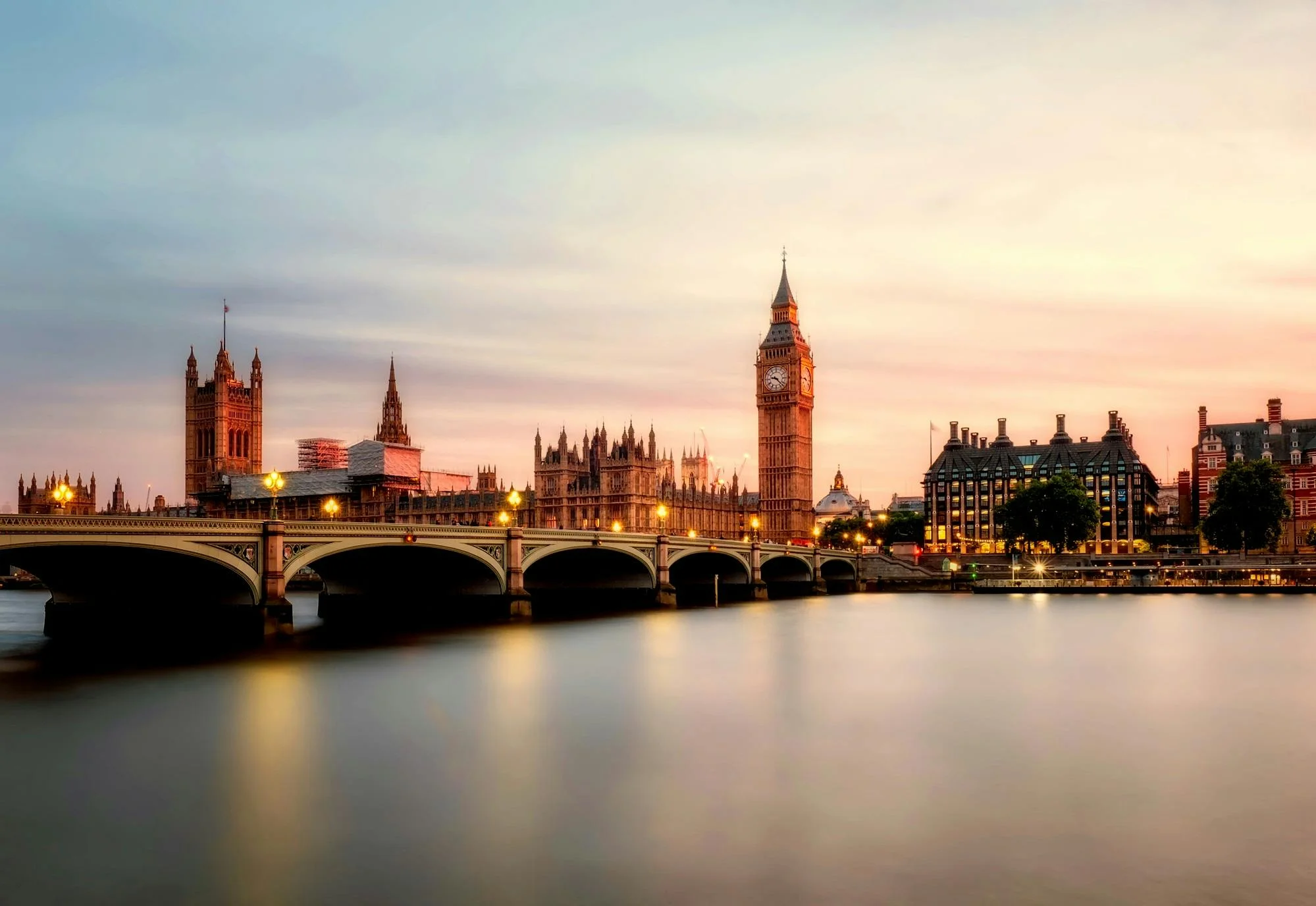
There's no better way to start your day in London than standing in front of the Palace of Westminster first thing in the morning. When the sun is still low and the red double-decker buses cross Westminster Bridge, you understand why this image is a universal symbol.
Big Ben (which is actually the name of the bell, not the tower — that's the Elizabeth Tower) marks the start of your adventure. From the bridge, the view is spectacular: on one side, the Houses of Parliament reflected in the Thames; on the other, the London Eye slowly turning against the morning sky. Golden tip: Arrive before 8:30. At that hour, the bridge isn't yet packed with tourists and you can get clean photos. On weekdays, you'll see Londoners rushing toward Westminster Station with their takeaway coffees, which adds a wonderful touch of authenticity.Walk through Parliament Square and marvel at the statues of Churchill, Mandela, Gandhi and Lincoln gathered in a single garden. It's one of those moments when history hangs heavy in the air.
For a complete immersion in this area, our experience London Bleisure: Westminster, St Paul's and Borough Market in One Day guides you step by step along the best route.
9:00 — Westminster Abbey: Where History Breathes
Two minutes' walk from Parliament, Westminster Abbey is one of the most important buildings in the English-speaking world. Every British monarch has been crowned here since William the Conqueror in 1066. Queen Elizabeth II was married here. Darwin, Newton, Dickens and hundreds of world-changing figures rest here.
The central nave overwhelms you with its Gothic verticality. The vaulted ceilings rise like praying hands towards the sky, and the light filtering through the stained glass creates a kaleidoscope of colours that changes with every hour.
Poets' Corner is the most moving section: memorials to Shakespeare, Austen, Bronte, Wordsworth, Byron... Although not all are buried here, all are honoured. It's the literary Pantheon of the English-speaking world. Practical note: Entry costs around 29 pounds, but it's worth every penny. Book online to skip the queues. The audio guide is included and excellent.For a complete imperial London route, discover Imperial London: From the British Museum to Westminster Abbey.
10:30 — Crossing the Thames: From Westminster to the South Bank
From Westminster, cross Hungerford Bridge (or take the path along the south bank of the Thames) towards the South Bank, Europe's most vibrant cultural mile.
The riverside walk is an experience in itself. To your left, the river; to your right, a succession of theatres, galleries and public spaces buzzing with activity. Street musicians, chalk artists drawing on the pavement, second-hand bookshops under the arches of Waterloo Bridge... Every step is a discovery.
The Tate Modern is your first essential stop. Housed in the former Bankside Power Station, this contemporary art museum is free (except temporary exhibitions) and holds works by Picasso, Warhol, Rothko, Dali and Hockney. But the most impressive thing is the building itself: the vast Turbine Hall is a cathedral-like space that each year hosts a different monumental installation.
Don't miss: The view from the 6th-floor restaurant. The London skyline with St. Paul's Cathedral in the foreground is one of the best panoramas in the city, and it costs nothing to go up.12:00 — Borough Market: Foodie Paradise
Ten minutes' walk from the Tate Modern, Borough Market is London's most famous food market and one of the oldest in the world (it's been operating since the 13th century, though the current building is Victorian).
You don't come here just to buy: you come to eat, taste, discover and repeat. Stalls offer everything from British artisan cheeses and fresh oysters to freshly made pad thai, Swiss raclette melted over potatoes, and brownies that should be illegal.
My essentials:For a total immersion in London's food scene, don't miss Gastronomic London: From Borough Market to Chinatown.
13:30 — St. Paul's Cathedral: The Dome That Defies the Sky
After filling up at Borough Market, cross the Millennium Bridge (the pedestrian bridge made famous by the Harry Potter films) and you'll arrive directly at the foot of St. Paul's Cathedral.
Christopher Wren's masterpiece, built after the Great Fire of London in 1666, is a monument to British resilience. Its dome, the second largest in the world after St. Peter's in the Vatican, has dominated the London skyline for over three centuries.
The interior is staggeringly beautiful. The golden mosaics of the dome gleam like the ceiling of a Byzantine church, and the acoustics are so perfect that if you whisper in the Whispering Gallery, someone on the other side of the dome (32 metres away) will hear you with total clarity.
Climb to the Golden Gallery at the top of the dome: 528 steps rewarded with a 360-degree view across the entire city. Exhausting, but absolutely unforgettable.
Historical note: During the World War II Blitz, the cathedral miraculously survived Nazi bombing. The famous photograph of the dome emerging through smoke and flames became a symbol of London's resistance.15:00 — Covent Garden: The Cultural Heart
From St. Paul's, a pleasant fifteen-minute walk takes you to Covent Garden, the former fruit and vegetable market turned into one of London's liveliest cultural centres.
The Apple Market occupies the original Victorian market building, with stalls selling crafts, handmade jewellery and vintage prints. But what truly makes Covent Garden special are the street performers: opera singers, magicians, acrobats and musicians performing in the central piazza at a level that rivals the West End.
Nearby, Neal's Yard is a hidden courtyard where every facade explodes with colour (cobalt blue, lemon yellow, cherry red) and where London's organic movement was born. And Seven Dials, the seven-street junction where Dickens set some of his darkest characters, is now a maze of independent boutiques and fashionable restaurants.
For afternoon tea: If you want to experience the quintessential English ritual, book at The Savoy or Fortnum & Mason (both minutes from Covent Garden). An afternoon tea with scones, cucumber sandwiches and miniature cakes is an experience that transcends food: it's a ceremony.Discover the best spots in the area with Instagrammable London: The City's Most Photogenic Spots.
16:30 — Tower Bridge and the Tower of London: Living History
Take the Tube (Piccadilly Line from Covent Garden to Tower Hill, 15 minutes) and you'll emerge in front of two of London's most iconic monuments.
Tower Bridge is much more than a bridge: it's a masterpiece of Victorian engineering that opens to let ships through with the same elegance it has for 130 years. If you're lucky enough to catch a bridge lift, the spectacle is mesmerising. The glass walkway at the top offers vertiginous views of the Thames beneath your feet.Right next door, the Tower of London has spent nearly a thousand years witnessing the country's most dramatic history. It's been a royal palace, prison, execution ground and home to the Crown Jewels (which are still here, guarded by the famous Beefeaters and their ravens).
If you don't have time to enter the Tower (the visit takes at least two hours), at least walk around the exterior and enjoy the views of Tower Bridge from the riverside.
18:00 — Camden or Brick Lane: Alternative London
For your penultimate stop, choose your adventure. If you're after alternative London, you have two brilliant options:
Camden Town is the quintessential punk, rock and bohemian neighbourhood. Camden Market is a labyrinth of stalls where you'll find everything from vintage clothing and rare vinyl records to street food from around the globe. The canals of Camden Lock, facades decorated with giant boots and guitars, and the electric energy of its streets make this neighbourhood a unique sensory experience. Brick Lane, in the East End, is the heart of multicultural London. Brick Lane's curries are legendary (there are over 60 Indian and Bangladeshi restaurants on a single street), the street art rivals Berlin's, and the Sunday second-hand markets are a treasure trove for bargain hunters.To explore this side of the city, our experience Authentic London: Camden, Brick Lane and Hidden Pubs takes you through corners tourists never find.
20:00 — Dinner and Night Skyline
To close your day in London, you have several options depending on your budget:
Gourmet option: Book at one of the restaurants with views at The Shard. Western Europe's tallest building (310 metres) offers a breathtaking night panorama. The city lights stretch to the horizon like a blanket of earthbound stars. Foodie option: Head back to Soho or Chinatown for dinner among the neon lights of Gerrard Street. Chinatown's dim sum restaurants are authentic, affordable and full of Chinese families, which is always a good sign. Classic option: Fish and chips in a historic pub by the Thames. Look for Ye Olde Cheshire Cheese (serving since 1667, where Dickens and Mark Twain drank) or The Lamb and Flag in Covent Garden (the West End's oldest pub).For a total luxury experience, discover London VIP: Michelin, West End and Views from The Shard.
21:30 — The Ultimate Night Walk
Before you leave, treat yourself to London's most beautiful night walk: from the South Bank, walk alongside the river heading east. To your right, the illuminated Tate Modern; ahead, St. Paul's Cathedral floating above a halo of golden light; the Millennium Bridge turned into a cinematic walkway; and the reflection of it all dancing on the dark waters of the Thames.
London at night is another city. More intimate, more mysterious, more itself. And that final walk, with illuminated Big Ben in the distance and the sound of its chimes arriving muffled across the water, is the perfect ending.
Practical Tips for Your Day in London
Transport: Get an Oyster Card or use a contactless card. The Tube is the fastest way to travel between distant areas, but walking between nearby attractions is always the best option (and it's free). Budget: Expect around 60-80 pounds per person for a full day (entry fees, food and transport). Many museums are free (Tate Modern, British Museum, National Gallery), which helps enormously. Best time to visit: April to June offers long days and pleasant weather. September and October have fewer tourists and beautiful autumn colours. Avoid August if you can (it's peak season and prices rise). Comfortable shoes: You'll walk between 15,000 and 20,000 steps. This is non-negotiable. Wear shoes that are already broken in. Essential reminder: Don't try to see everything. London is a city to return to. This itinerary gives you the foundations; you'll add layers on future visits.London can't be conquered in a day. But in a day well lived, London conquers you. And that's the magic: no matter how many times you return, there will always be a street you didn't know, a pub you hadn't tried, a view you hadn't seen from that angle.
Because London isn't a city you visit. It's a city you live, savour and carry inside you forever.