Strasbourg Cathedral
You arrive at the Place de la Cathédrale and the first thing that hits you isn't the height — though 142 metres of Go...
You arrive at the Place de la Cathédrale and the first thing that hits you isn't the height — though 142 metres of Gothic spire command respect — but the colour. The pink Vosges sandstone used to build this cathedral between 1015 and 1439 shifts tone with every hour: rosy at dawn, golden at noon, almost crimson at sunset. It's a living building that breathes with the light, and when the young Goethe first beheld it in 1770, he wept. You understand why.
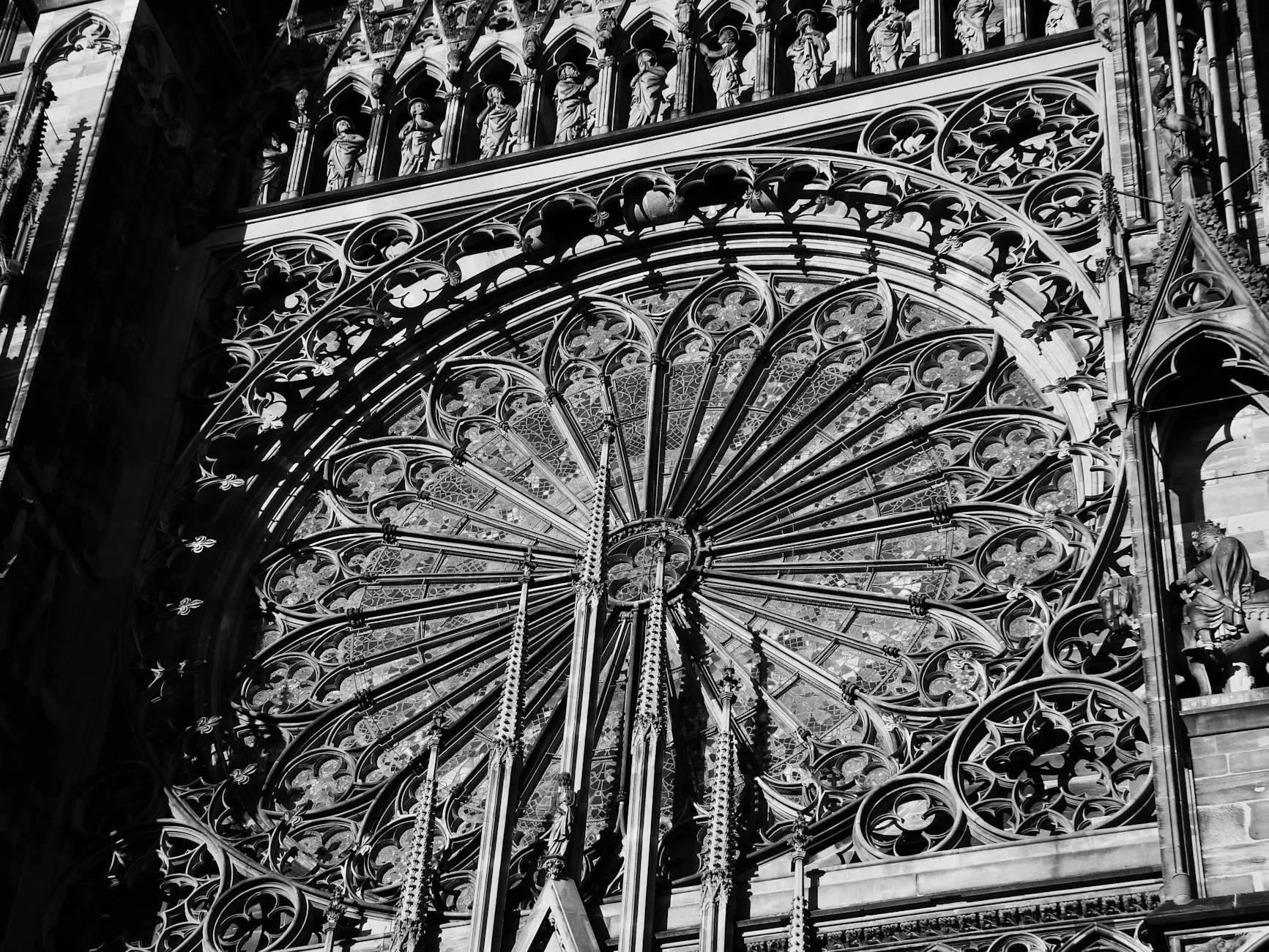
The **western façade** is a genuine book in stone that forces you to stop. Over a thousand sculpted figures narrate biblical scenes with a level of detail that makes you forget they were carved seven centuries ago. The Wise and Foolish Virgins flank the central portal with an expressiveness that anticipates the Renaissance by two hundred years. And there's a detail many visitors miss: the second tower was never completed. For centuries they debated whether to build it, but in the end the asymmetry became a trademark — this cathedral was, until 1874, the tallest structure ever built by humankind, and it didn't need a second spire to prove it.
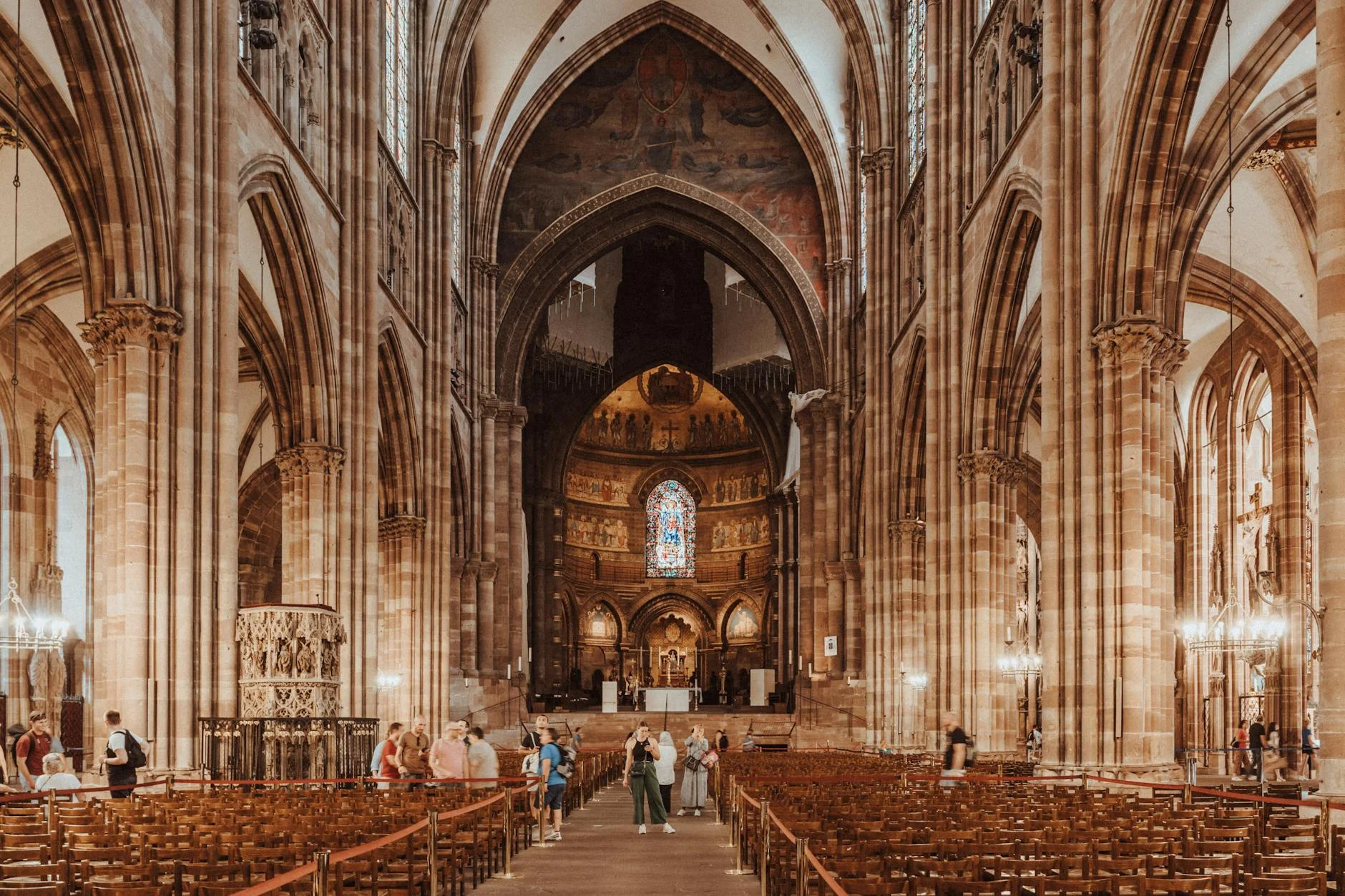
Crossing the threshold, the nave greets you with a gloom that the **medieval stained-glass windows** transform into a kaleidoscope of colour. Some date from the 12th century — surviving wars, revolutions and bombardments — and bathe the space in blues, reds and golds that change with the sun's position. The effect is hypnotic: the grey stone interior comes alive with every filtered ray, and on clear summer days the floor becomes a luminous mosaic that creeps slowly through the hours.
In the left aisle, the **Angels' Pillar**, a column sculpted around 1230, depicts the Last Judgement across three tiers of figures with a mastery that leaves you speechless. The trumpeting angels at the summit possess an elegance and movement you won't see again in Gothic sculpture — pure dynamism frozen in stone.
But the true star hides in the right chapel: the **Astronomical Clock**, a 16th-century mechanical marvel that isn't merely a timepiece but a medieval computer. It calculates planetary positions, equinoxes, solar and lunar eclipses, and the date of Easter for every year with humbling precision. Each day at 12:30 the show begins: the Apostles file past Christ, a mechanical rooster crows three times while flapping its wings, and Death turns its hourglass reminding all present that time does not stop. The queue starts forming at 11:30 — every minute of waiting is worthwhile.
If you have energy left, the climb to the **panoramic platform** at 66 metres is essential. It's 332 steps up a narrow spiral staircase that opens onto a terrace from which Strasbourg unfolds like a relief map: the russet rooftops of Petite France to the west, the German Black Forest to the east, the French Vosges range to the west, and on clear days, the distant silhouette of Freiburg Cathedral rising from the hills.
**Hours:** Cathedral open daily 08:30–11:15 and 12:45–17:45. Astronomical Clock at 12:30 (paid entry from 12:00, around €3). Platform climb: €5 adults.
About this activity
Strasbourg's Notre-Dame Cathedral is one of Gothic architecture's greatest achievements, standing 142 metres tall as the world's tallest building for over two centuries. Its western facade is a stone book with over a thousand sculpted figures. Inside: 12th-century stained glass, the 13th-century Angels' Pillar depicting the Last Judgement, and the famous Astronomical Clock whose automata come alive daily at 12:30. A 66-metre panoramic platform offers views to the Black Forest and Vosges mountains.
Practical information
Book now
Reviews
Be the first to review this activity