Cultural Strasbourg: Gothic Cathedral, Museums and European Heritage
Strasbourg is a city that reads like a book of stone, timber, and glass — and this experience invites you to turn its...
8h
Duration
5
stops
09:30 - 17:30
Schedule
Free - €€
Price range
Cultural Strasbourg: Gothic Cathedral, Museums and European Heritage is a curated one-day experience in Estrasburgo with 5 activities: Strasbourg Cathedral, Petite France Quarter, Palais Rohan Fine Arts Museum, Boat tour on the Ill canals and 1 more. Estimated duration: 8h. Price range: Free - €€.
Strasbourg is a city that reads like a book of stone, timber, and glass — and this experience invites you to turn its most fascinating pages. From the Gothic spire that pierced the sky for centuries as the tallest structure on Earth to the canals where medieval tanners left their mark on every beam, culture here isn't exhibited: it's breathed, walked, and navigated.
This cultural itinerary is designed for those who want to understand Strasbourg beyond the postcard. It's not just about seeing monuments but about grasping the layers of history coexisting on every corner: the Romanesque beneath the Gothic, the Alsatian alongside the French, the medieval next to the contemporary European. A full day that balances the awe of carved stone with the quiet contemplation of art and the unique perspective that only water can offer.
### The route
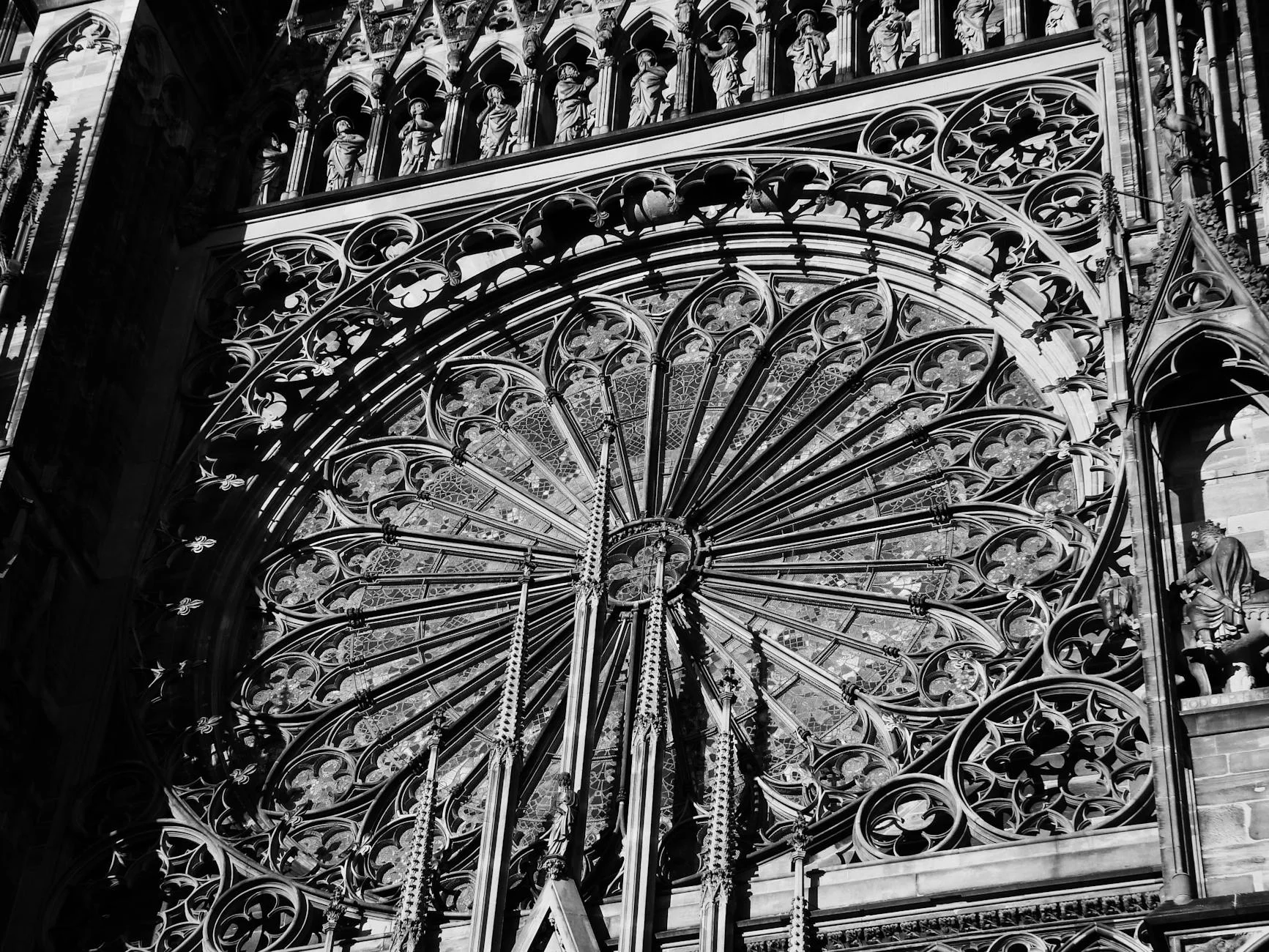
The morning begins where any visit to Strasbourg must begin: before the **Cathedral of Notre-Dame**, that mountain of pink Vosges sandstone that Victor Hugo described as "a prodigy of the gigantic and the delicate." Its thousand-plus sculpted figures on the western façade stop you in your tracks, and when you step inside to discover the 16th-century Astronomical Clock — with its automata that spring to life every noon — you understand that mechanical precision and faith coexisted here for centuries without contradiction.
From the cathedral, the walk leads naturally to the **Petite France Quarter**, where Strasbourg reveals its most intimate face. The canals of the Ill multiply the half-timbered façades in greenish reflections, the Ponts Couverts stand guard from their medieval towers, and every alley smells of gingerbread and old wood. Here time isn't measured in hours but in centuries, and UNESCO knew it when they declared this place a World Heritage Site.
After noon, culture shifts register at the **Fine Arts Museum in the Palais Rohan**, a miniature Alsatian Versailles where five centuries of European painting unfold in gilt-moulded salons. From Giotto's Italian Primitives to a Goya that stares at you from the canvas, the collection surprises with its depth — especially its Spanish painting section, one of the richest outside the Iberian Peninsula.
The afternoon gifts you a literal change of perspective: the **boat cruise along the Ill canals** shows you the city from below, where façades reflect in the water and medieval bridges frame views no street can offer. Seventy minutes of navigation passing beneath the Barrage Vauban and through the Wilhelmine Neustadt, revealing a Strasbourg discovered only by floating.
The finale is the **European Quarter**, where history gives way to present and future. The European Parliament hemicycle, with its deliberately unfinished façade as a metaphor for a permanently evolving project, reminds you that Strasbourg isn't just heritage of the past: it's the laboratory where Europe is still being built, stone by stone, debate by debate.
Strasbourg is a city where every stone tells a story swinging between French and German culture, and that duality has produced a unique European heritage. This cultural route begins at the Cathedral of Notre-Dame de Strasbourg, a Gothic masterpiece four centuries in the making whose pink Vosges sandstone facade features over a thousand carved figures. Inside, the 16th-century Astronomical Clock still calculates equinoxes and eclipses with astonishing mechanical precision. Then the Petite France quarter, a UNESCO World Heritage site with half-timbered houses reflected in the River Ill's canals. The afternoon brings the Palais Rohan Fine Arts Museum with works from Giotto to Goya. The day ends at the European Quarter, home to the European Parliament and Council of Europe.
Daily Itinerary
Strasbourg Cathedral
You arrive at the Place de la Cathédrale and the first thing that hits you isn't the height — though 142 metres of Gothic spire command respect — but the colour. The pink Vosges sandstone used to build this cathedral between 1015 and 1439 shifts tone with every hour: rosy at dawn, golden at noon, almost crimson at sunset. It's a living building that breathes with the light, and when the young Goethe first beheld it in 1770, he wept. You understand why. The **western façade** is a genuine book in stone that forces you to stop. Over a thousand sculpted figures narrate biblical scenes with a level of detail that makes you forget they were carved seven centuries ago. The Wise and Foolish Virgins flank the central portal with an expressiveness that anticipates the Renaissance by two hundred years. And there's a detail many visitors miss: the second tower was never completed. For centuries they debated whether to build it, but in the end the asymmetry became a trademark — this cathedral was, until 1874, the tallest structure ever built by humankind, and it didn't need a second spire to prove it. Crossing the threshold, the nave greets you with a gloom that the **medieval stained-glass windows** transform into a kaleidoscope of colour. Some date from the 12th century — surviving wars, revolutions and bombardments — and bathe the space in blues, reds and golds that change with the sun's position. The effect is hypnotic: the grey stone interior comes alive with every filtered ray, and on clear summer days the floor becomes a luminous mosaic that creeps slowly through the hours. In the left aisle, the **Angels' Pillar**, a column sculpted around 1230, depicts the Last Judgement across three tiers of figures with a mastery that leaves you speechless. The trumpeting angels at the summit possess an elegance and movement you won't see again in Gothic sculpture — pure dynamism frozen in stone. But the true star hides in the right chapel: the **Astronomical Clock**, a 16th-century mechanical marvel that isn't merely a timepiece but a medieval computer. It calculates planetary positions, equinoxes, solar and lunar eclipses, and the date of Easter for every year with humbling precision. Each day at 12:30 the show begins: the Apostles file past Christ, a mechanical rooster crows three times while flapping its wings, and Death turns its hourglass reminding all present that time does not stop. The queue starts forming at 11:30 — every minute of waiting is worthwhile. If you have energy left, the climb to the **panoramic platform** at 66 metres is essential. It's 332 steps up a narrow spiral staircase that opens onto a terrace from which Strasbourg unfolds like a relief map: the russet rooftops of Petite France to the west, the German Black Forest to the east, the French Vosges range to the west, and on clear days, the distant silhouette of Freiburg Cathedral rising from the hills. **Hours:** Cathedral open daily 08:30–11:15 and 12:45–17:45. Astronomical Clock at 12:30 (paid entry from 12:00, around €3). Platform climb: €5 adults.
Place de la Cathédrale, 67000 Strasbourg, Francia

Petite France Quarter
You descend from the cathedral along the Rue des Dentelles and, suddenly, the city changes century. Stone façades give way to timber, the streets narrow until you can almost touch both walls with outstretched arms, and the sound of water appears everywhere. You've arrived at **Petite France**, the quarter UNESCO chose as the first complete urban centre declared a World Heritage Site in France — and when you see it, you understand they didn't need to think twice. The name is deceptive, and its origin has a certain irony: "Petite France" isn't a patriotic homage but the nickname locals gave the neighbourhood because it housed, in the 15th century, a hospital treating syphilis — the "French disease." Today that unglamorous past lies buried beneath layers of red geraniums, checkered-tablecloth restaurants, and the brazen beauty of half-timbered houses that have stood since the 16th century. The natural starting point is the **Ponts Couverts**, three medieval bridges flanked by four square stone towers from the 13th-century fortifications. Despite their name ("covered bridges"), they lost their wooden roofs in the 18th century, but the towers remain, massive and imperturbable, reflected in the Ill with a symmetry that seems designed for Instagram — though they've been posing like that for seven hundred years. From the bridges, the view is Strasbourg's official postcard: towers mirrored in the water, colourful houses peeking behind, and always a stork soaring overhead. But it's walking inside the quarter that the magic truly reveals itself. The streets are cobbled with irregular stones, and when you look up you discover **oak-beamed façades** darkened by centuries, shuttered windows painted green, blue or red, and balconies dripping with flower pots as if every neighbour competed in a permanent gardening contest. The **Maison des Tanneurs** is the landmark building: built in 1572 as the tanners' guildhall, it has four storeys of open timber galleries where hides were hung to dry. Today it's a restaurant serving choucroute and tarte flambée at tables overlooking the canal. The nearby **Petite France lock** still functions, showing how the hydraulic system that powered medieval mills adapted to the 21st century without losing its essence. What makes this quarter special isn't a single monument but the **accumulation of authenticity**. People live here — mailboxes on doors, clotheslines in courtyards, bicycles propped against beams — and that gives it a life that museum-quarters usually lose. Artisans keep traditional Alsatian crafts alive in tiny workshops, bakeries smell of freshly baked kugelhopf, and if you come early morning before the tour groups arrive, you can walk these streets nearly alone with only the sound of water for company. **Access:** Free, open 24 hours. Best light for photos: early morning or sunset. At Christmas, one of Alsace's most beautiful markets transforms the quarter.
Petite France, 67000 Strasbourg, Francia

Palais Rohan Fine Arts Museum
Explore a collection spanning Italian Primitives to Impressionism in the splendid 18th-century Palais Rohan, former residence of Strasbourg's prince-bishops.
2 Place du Château, 67000 Strasbourg, Francia

Boat tour on the Ill canals
Cruise along the River Ill canals on an open-top panoramic boat, discovering Strasbourg's architecture and history from a unique waterside perspective.
Embarcadère Batorama, Palais Rohan, 67000 Strasbourg, Francia

European Quarter and European Parliament
Discover Strasbourg's role as the capital of European democracy by visiting the European Parliament, the Council of Europe, and the European Court of Human Rights.
1 Allée du Printemps, 67070 Strasbourg, Francia

Route map
Loading...
Route map
Loading...
Traveler reviews
Be the first to review this experience
Frequently asked questions
What does the Cultural Strasbourg: Gothic Cathedral, Museums and European Heritage experience include?
Cultural Strasbourg: Gothic Cathedral, Museums and European Heritage includes 5 activities curated by a local expert: Strasbourg Cathedral, Petite France Quarter, Palais Rohan Fine Arts Museum, Boat tour on the Ill canals, European Quarter and European Parliament.
How long does the Cultural Strasbourg: Gothic Cathedral, Museums and European Heritage experience last?
The experience has an estimated duration of 8h. You can adapt it to your own pace, pause it and resume whenever you want.
How do I book activities in Estrasburgo?
Many activities include direct links to trusted platforms such as Civitatis, GetYourGuide or TheFork. Click the booking button on each activity to complete the process.
How much does the Cultural Strasbourg: Gothic Cathedral, Museums and European Heritage experience cost?
The price range of the activities is Free - €€. Let'sJaleo is free: you only pay for the activities you book.