Local Nice: Markets, Alleyways and the Authentic Life of the French Riviera
### The Nice They Don't Show You on Postcards There's a Nice that cruise ships don't reveal and guidebooks barely me...
9h
Duration
5
stops
09:00 - 18:00
Schedule
Free - €€-€€€
Price range
Local Nice: Markets, Alleyways and the Authentic Life of the French Riviera is a curated one-day experience in Niza with 5 activities: Cours Saleya: Flower and Local Produce Market, Vieux Nice: Old Town Alleyways, Socca at Chez Thérésa: Niçois Street Food, Port District: Fishermen's Bistros and 1 more. Estimated duration: 9h. Price range: Free - €€-€€€.
### The Nice They Don't Show You on Postcards
There's a Nice that cruise ships don't reveal and guidebooks barely mention. It's the Nice of women who've been buying flowers from the same Cours Saleya stall every Tuesday for thirty years, the fisherman unloading his catch at dawn in Port Lympia, the retiree reading Le Petit Niçois on the Café de Turin terrace with a glass of rosé. This experience immerses you in the daily life of a city that has been seducing those who know how to look beyond the Promenade des Anglais for centuries.
### The Route
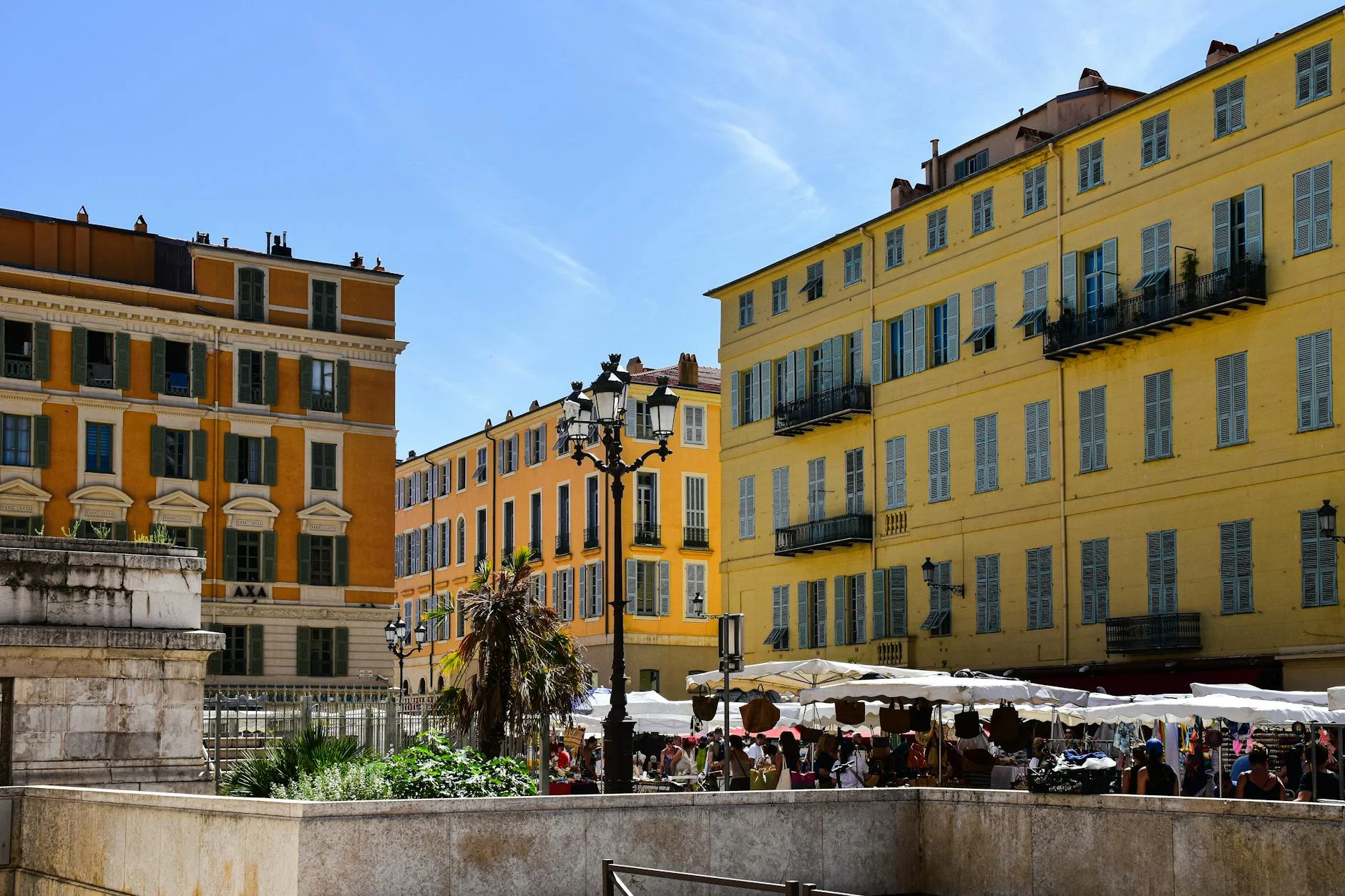
Your morning begins at the **Cours Saleya**, when the flower and local produce market is in full swing. The scent of lavender mingles with marinated olives and goat cheese from the hinterland, while vendors—many second and third generation—negotiate in a dialect that sounds more Italian than French. Then you lose yourself in the **alleyways of Vieux Nice**, that labyrinth of ochre and terracotta façades where laundry hangs between balconies and cats doze on thresholds unchanged since the eighteenth century.
At noon, the essential stop is **Chez Thérésa** on the Cours Saleya itself, where socca—that giant chickpea-flour crêpe baked in a wood-fired oven—is eaten with your fingers, fresh from the copper pan, sharing a bench with retirees and market workers. This is Niçois street food in its purest form, unfiltered and unpretentious.
The afternoon takes you to the **Port district**, where Port Lympia maintains its working fishing fleet and the old warehouses on Rue Bonaparte have become bistros where the menu literally depends on what the boats brought in. Here, fish needs no fancy names or elaborate presentation.
The day culminates at **Place Garibaldi**, the most elegant and least touristy square in the city, where Niçois celebrate the daily aperitif ritual beneath Piedmontese arcades. A pastis, a Spritz, or simply a long coffee while the evening light paints the façades gold: this is how local Nice bids farewell to each day.
### An Unhurried Immersion
This isn't a monument-and-selfie itinerary. It's an experience that requires letting go, stopping to chat with an olive vendor, sitting where the locals sit, and understanding that in Nice life is savored slowly. The reward is discovering a city that, beneath its Côte d'Azur tourist façade, beats with the authenticity of a Mediterranean village that has never stopped being Provençal and Italian in equal measure.

Nice has an identity far beyond the Promenade des Anglais and luxury hotels. The city is deeply Italian in its DNA — it was part of the Savoy States until 1860 — and that heritage is felt in every alley of the Vieux Nice, in the baroque architecture, in the Niçois dialect still spoken by elders, and in a cuisine that fuses Provence with Liguria.
The Cours Saleya is the beating heart of this local life. From Tuesday to Sunday, the flower and fresh produce market fills the entire square. Mondays transform it into an antique flea market. But the real local Nice is in the backstreets: Rue Pairolière with its spice shops, Place du Pin with its fish market, and the Port district where bistros serve tripes à la niçoise and freshly baked pissaladière.
Daily Itinerary
Cours Saleya: Flower and Local Produce Market
The **Cours Saleya** wakes each morning to a ritual Nice has repeated since the nineteenth century. Before the sun reaches the baroque façades framing this elongated square in the heart of Vieux Nice, vans have already unloaded their treasure: mountains of Grasse roses perfuming the air from ten meters away, lavender bundles tied with raffia, sunflowers competing in yellow with the Provençal façades, and mimosas announcing spring long before the calendar confirms it. But the Cours Saleya is far more than a flower market. You advance between the stalls and discover a gastronomic atlas of Provence concentrated in two hundred meters: Nyons olives marinated with herbs, dark dense tapenades, goat cheeses from the Var hinterland still smelling of wild thyme, jars of lavender honey bearing some Grasse beekeeper's seal, and seasonal fruit that here tastes the way it always should. The vendors, many from families occupying the same stall for three generations, know their customers by name and ask about the children before weighing the goods. The market has its schedules and rhythms. **Tuesday through Saturday** (06:00–17:30) is when the Cours Saleya shows its most authentic face: florists dominate the southern side, food producers the north, and between them flows a varied humanity of professional chefs selecting produce, retirees doing their daily shop, and tourists stopping mesmerized by the colors. **Sundays** (06:00–13:30) the market focuses on local products and flowers, with a more relaxed, family atmosphere. **Mondays** bring a total metamorphosis: flower stalls vanish and the Cours Saleya becomes a **brocante**—an antiques flea market—where local decorators, collectors, and the curious rummage through Art Deco tableware, gilded frames, vintage Promenade postcards, and crystal lamps that once lit a Belle Époque villa. For breakfast like a Niçois, find one of the side stalls serving **pan bagnat**: the quintessential Provençal sandwich, a round bread soaked in olive oil and filled with tuna, tomato, black olives, hard-boiled egg, and anchovies. Pair it with a coffee at one of the terraces bordering the square—the price is tourist-grade but the view compensates—and watch the market come alive around you. Produce prices are reasonable if you buy where locals buy: look for stalls without English signs where conversation flows in French sprinkled with Niçois words. **A tip**: arrive before 09:00 if you want to see the market without crowds and with the best selection. After 11:00 the aisles become packed and some stalls start packing up. And if photography interests you, the early morning light filtered through the eastern buildings creates a golden atmosphere that turns any flower stall into a postcard.
Cours Saleya, 06300 Nice, Francia

Vieux Nice: Old Town Alleyways
You enter **Vieux Nice** through any of its side streets and the twenty-first century stays outside. The lanes narrow to the point where you can touch both walls with outstretched arms, and the sky shrinks to a blue strip framed by façades in ochre, terracotta, faded yellow, and that salmon pink found only on the Riviera. Laundry strung between balconies creates an improvised ceiling of sheets and T-shirts filtering the Mediterranean light, and on every corner a cat dozes with the indifference of one who knows this neighborhood has belonged to its kind for centuries. Vieux Nice is a labyrinth with a soul of its own. Each street has its character and history, and getting lost is the only honest way to know it. **Rue de la Préfecture** is the commercial axis where local designer boutiques coexist with vintage clothing shops and tiny art galleries. **Rue du Collet** smells of cold-pressed olive oil and artisanal Marseille soap: this is where shops have sold the products defining Provence for generations. **Rue Droite**, quieter and less traveled, hides baroque palaces converted into museums—like the Palais Lascaris—and craftsmen's workshops working leather and ceramics as they did in the eighteenth century. The neighborhood's heart beats at **Place Rossetti**. This small square, dominated by the baroque façade of the Cathedral of Sainte-Réparate (seventeenth century), is where all Vieux Nice paths converge. Children play around the central fountain while parents have coffee on the terraces, and on the southern corner the ice cream shop **Fenocchio** has been drawing locals since 1966 with flavors ranging from lavender and thyme to beer and tomato. The queue is inevitable but part of the ritual: choosing among over ninety flavors is a decision Niçois take very seriously. Beyond the main streets, Vieux Nice guards secrets for those who know where to look. The **chapelles des pénitents**—brotherhood chapels—appear at the least expected crossroads, their austere façades hiding dazzling baroque interiors. The **passages** connect parallel streets through inner courtyards where bougainvillea climbs century-old stone walls. And if you look up, the **trompe-l'oeil** paintings on some façades create fake windows and balconies that fool the eye with a skill that says much about local humor. The neighborhood is **open 24 hours**, but each time of day offers a different experience. Early morning (before 09:00), the streets belong to residents: ladies with shopping carts, delivery drivers, early-rising cats. At midday, life concentrates on restaurant terraces. In the afternoon, shops take center stage and the stroll becomes leisurely. And at night, Vieux Nice transforms: lanes are lit by lanterns, bars open their doors, and live music escapes from venues into the squares. It's the most magical moment, when the neighborhood recovers the bohemian spirit that attracted artists and writers for centuries. **Practical tip**: wear comfortable shoes. Vieux Nice's ground is uneven cobblestones that punish feet, and the slopes toward Castle Hill can be steep. A pair of well-soled sneakers is all you need to enjoy this labyrinth without rushing.
Vieux Nice, 06300 Nice, Francia

Socca at Chez Thérésa: Niçois Street Food
Smoke from the wood-fired oven escapes through the half-open door, carrying an aroma unlike anything you've smelled before: chickpea flour slowly toasting on copper, olive oil crackling, and that caramelization point achievable only when the temperature exceeds **500 degrees Celsius**. You're at **Chez Thérésa**, on the Cours Saleya, and what they're pulling from the oven is a **socca**: the giant, thin, crispy crêpe that is Nice's most iconic street food and probably the finest example of how a humble ingredient can become a gastronomic icon. Socca has a history stretching back centuries, to when Genoese sailors brought the custom of cooking with chickpea flour to the Niçois coast. The recipe couldn't be simpler: chickpea flour, water, extra-virgin olive oil, salt, and pepper. Nothing more. But the magic is in the execution: the batter, as liquid as cream, is poured into enormous **copper pans** over half a meter in diameter, generously greased with olive oil. These pans enter a **wood-fired oven** at infernal temperature, and within minutes the surface turns golden and cracks while the interior maintains a creamy texture that melts in the mouth. It's cut into irregular pieces, sprinkled with **freshly ground black pepper**, and eaten with your fingers, standing or seated on the stall's wooden benches. No porcelain plates, no cutlery: just paper and appetite. **Chez Thérésa** has no pretensions and needs none. It's a simple, almost rudimentary stall planted in the middle of the Cours Saleya for generations. There's no laminated menu and no waiter: you walk up to the counter, order what you want, pay in cash, and find a spot on the shared benches. You'll sit beside neighborhood retirees who come every Tuesday, market workers taking their mid-morning break, and the occasional savvy tourist lucky enough to have asked a local where to find the city's best socca. Beyond socca, the stall offers other Niçois street food classics worth trying. The **petits farcis** are seasonal vegetables—tomatoes, zucchini, eggplants, peppers—stuffed with a mixture of meat, breadcrumbs, garlic, and Provençal herbs, baked until the surface gratins. The **pissaladière** is Nice's answer to pizza: a bread-dough base topped with a thick layer of onions caramelized for hours, salted anchovies, and black Niçois olives, baked until the edges crunch. And the **beignets de fleur de courgette**—zucchini flower fritters—are a seasonal delicacy found only in spring and summer: freshly cut flowers coated in a light batter and fried to order. The stall opens **Tuesday through Sunday, 08:00 to 14:00**, though in practice it closes when supplies run out, which often happens well before 14:00 on busy days. **Monday is closed** because the Cours Saleya hosts the brocante. A portion of socca costs between 3 and 5 euros depending on size, and an assortment of petits farcis or pissaladière runs 5–7 euros. Honest food at honest prices. **Local tip**: order the socca fresh from the oven and don't be impatient if there's a queue—the wait is part of the ritual. If you arrive after 12:00, only socca and little else may remain. And bring cash: Thérésa doesn't accept cards.
Cours Saleya, 06300 Nice, Francia

Port District: Fishermen's Bistros
**Port Lympia** greets you with the metallic clinking of halyards against masts and the cries of gulls gliding over fishing boats moored at the quay. You're in Nice's harbor, and though less than a kilometer from Vieux Nice, here the city shifts register completely. Cruise passengers and Promenade tourists disappear, replaced by fishermen mending nets, retirees playing pétanque on the quayside esplanade, and local families walking dogs along the **Quai Lunel** as the afternoon sun paints the harbor water with golden reflections. Port Lympia was built in **1749** by order of King Charles Emmanuel III of Sardinia, when Nice still belonged to the Sardinian-Piedmontese kingdom. The name comes from a natural spring (Lympia, from the Greek *limpidus*) that fed the bay before the port was excavated. For two centuries it was the city's commercial engine: goods from Genoa, Sardinia, and North Africa entered here, while Grasse's oils, flowers, and perfumes departed. Today the port maintains its fishing activity—every dawn boats head out and return with the day's catch—alongside a sports marina and the Corsica ferry terminal. What makes the Port district special isn't the boats but what happens around them. **Rue Bonaparte**, running parallel to the northern quay, was for centuries the street of port warehouses. Those stone warehouses, with their austere façades and enormous doors, have transformed in recent years into **bistros and restaurants** where the star product is, logically, the fish unloaded each morning just meters away. Here you won't find tourist menus with laminated photos: menus change with the day's catch, handwritten on chalkboards that a waiter recites with the ease of someone who knows the product speaks for itself. **Les Pêcheurs**, right on the quay, is an institution for grilled-fish lovers. The **Café de Turin**, open since **1908** on Place Garibaldi (five minutes' walk away), is Nice's seafood temple: platters of oysters, sea urchins, prawns, and whelks that Niçois devour on family Sundays like a sacred rite. The terrace tables, shielded by green awnings, have been the stage for celebrations, reunions, and those long Mediterranean after-lunch sessions where time is measured in bottles of Provençal rosé for over a century. Beyond gastronomy, the Port district has heritage that goes unnoticed unless you look up. The **Church of the Immaculate Conception**, on Rue de la République, is a gem of **Genoese baroque** reflecting the neighborhood's Italian past: its interior, with ceiling frescoes and pink marble columns, rivals Vieux Nice's churches in beauty but without the queues or crowds. And on the hill overlooking the port, the **Parc du Mont Boron** offers pine-and-oak trails with panoramic views stretching from the airport to Cap Ferrat. Port restaurants follow a typically French schedule: **lunch 12:00–14:30** and **dinner 19:00–22:30**. Prices are moderate for Nice: a grilled fish dish with sides runs 18–25 euros, and a fruits de mer platter for two at the Café de Turin starts at 40 euros. Booking is advisable on weekends, especially for terrace tables with harbor views. **Tip**: if you want to see the port at its most authentic, come at dawn (06:00–07:00) when the fishing boats return and unload the catch on the quay. It's a spectacle few tourists witness, connecting you with the seafaring essence of a city that, despite its glamorous reputation, still lives with its feet in the sea.
Quai Lunel, 06300 Nice, Francia

Place Garibaldi: Aperitivo and Neighbourhood Life
**Place Garibaldi** appears before you like an Italian opera set: symmetrical arcades painted in golden ochre frame a rectangular square where the evening light reflects off the central fountain and the bronze statue of **Giuseppe Garibaldi**—hero of Italian unification, born in Nice in 1807—surveys the scene with that determined gaze that defined him. It's the city's most elegant square and, paradoxically, the least frequented by tourists, making it the perfect place to experience the Niçois aperitif ritual. The square was designed in **1773** by architect Antonio Spinelli, following the model of Piedmontese squares in Turin. The influence is obvious: the porticoed arcades surrounding three of its four sides, the uniform-colored façades, the proportions calculated so light enters optimally at every hour of the day... everything breathes an order and harmony more reminiscent of Piedmont than Provence. This is no coincidence: Nice belonged to the Kingdom of Sardinia-Piedmont until 1860, when it joined France after a referendum, and Place Garibaldi is the most visible monument to that Italian past the city has never wanted to fully erase. From **18:00** onward, the square transforms. The terraces of cafés and bars occupying the ground floors of the arcades begin filling with a parade of Niçois arriving alone, in couples, or in groups of friends to celebrate the **apéro**: that sacred moment between work and dinner when the entire city sits down, orders a drink, and lets time pass. On the tables, glasses of **pastis**—the Provençal anise drink that clouds when cold water is added—mingle with intensely orange **Spritz** glasses, pints of local craft beer, and the occasional Provençal rosé drunk like water here. Nobody's in a hurry. Conversations flow between laughter, the clinking of glasses sets the rhythm, and children run around the fountain while their parents enjoy that particular peace found only in a Mediterranean square as evening falls. Just beside the square, on **Rue Sainte-Réparate**, stands **Chez Pipo**, another Niçois institution that has been serving socca for decades in an unpretentious venue where wooden benches are shared with strangers and the only menu that matters is what comes out of the wood-fired oven. Pipo is the perfect complement to a Garibaldi aperitif: a crunchy piece of socca with pepper and a glass of wine before deciding where to dine. Place Garibaldi is also the gateway to the **Garibaldi-Riquier neighborhood**, Nice's most multicultural area. Within just a few streets, African restaurants coexist with Asian shops, Tunisian bakeries, Maghrebi craft workshops, and Italian trattorias that recall how this quarter was for centuries home to Genoese immigrants. It's a microcosm reflecting the real Nice: a city that has always been a port of arrival and cultural melting pot, far more complex and diverse than the Promenade des Anglais postcard suggests. On **Friday evenings**, the square takes on special energy. Street musicians set up beneath the arcades, bars bring out extra tables, and the festive atmosphere extends well into the early hours. It's the best time of the week to visit Garibaldi: when the square stops being a historic monument and becomes what it always was—a meeting place where Niçois celebrate life with that blend of Italian elegance and Provençal nonchalance you won't find anywhere else on the Côte d'Azur. Terraces open from **09:00 to midnight** (later on Fridays and Saturdays). A pastis runs 4–5 euros, a Spritz 7–8 euros, and a local craft beer 5–6 euros. No reservation needed: simply find an empty table, sit down, and let the square do the rest.
Place Garibaldi, 06300 Nice, Francia

Route map
Loading...
Route map
Loading...
Traveler reviews
Be the first to review this experience
Frequently asked questions
What does the Local Nice: Markets, Alleyways and the Authentic Life of the French Riviera experience include?
Local Nice: Markets, Alleyways and the Authentic Life of the French Riviera includes 5 activities curated by a local expert: Cours Saleya: Flower and Local Produce Market, Vieux Nice: Old Town Alleyways, Socca at Chez Thérésa: Niçois Street Food, Port District: Fishermen's Bistros, Place Garibaldi: Aperitivo and Neighbourhood Life.
How long does the Local Nice: Markets, Alleyways and the Authentic Life of the French Riviera experience last?
The experience has an estimated duration of 9h. You can adapt it to your own pace, pause it and resume whenever you want.
How do I book activities in Niza?
Many activities include direct links to trusted platforms such as Civitatis, GetYourGuide or TheFork. Click the booking button on each activity to complete the process.
How much does the Local Nice: Markets, Alleyways and the Authentic Life of the French Riviera experience cost?
The price range of the activities is Free - €€-€€€. Let'sJaleo is free: you only pay for the activities you book.